Microsoft Office Document Cache
To enable the Disk Cleanup Wizard Handler for the Office Document Cache, follow these steps: Start the Disk Cleanup Wizard. To do this, click Start, click All Programs, click Accessories, click System Tools, and then click Disk Cleanup. Select the drive that you want to clean up, and then click OK. MSOsync.exe/Microsoft Office Document Cache Sync Client Interface hogging memory and CPU. Now the Microsoft document cache sync is using an enormous about of memory and CPU - sometimes causing the computer to freeze. Why is it doing this? This thread is locked. You can follow the question or vote as helpful, but you cannot reply to this thread.
What Does It Do?When you save a Microsoft Office file to an online location–for example, when you save a file to Microsoft OneDrive or a SharePoint server–Office doesn’t just save the file directly to that server. Instead, it saves the file to the “Office Document Cache” on your computer.
Office then uploads that cached file to the server and handles any connection or file conflict problems.For example, if you’re working with a spotty Internet connection, you can save a file to the remote server and Office will upload that file later on, when you have a solid Internet connection. If there’s a problem uploading a file, Office can keep that local copy and inform you of the problem. If the remote server itself has a problem, Office can hold onto its local copy and upload the file when the server comes back online.The Office Upload Center gives you a way to view these upload tasks and interact with them, which is especially helpful if there’s a problem. If there’s a problem, you’ll get a notification and you can deal with it. You can view pending uploads, view completed uploads, and view all cached files.This tool does feel a bit redundant if you’re using Microsoft OneDrive, as Windows 10 and 8.1 both include built-in support for OneDrive. But it’s used for more than just OneDrive.How to Use the Office Upload CenterThe Office Upload Center will be on your PC if you’ve installed Microsoft Office. You’ll often see it in your system tray–its normal icon is an orange circle with an up arrow on it.
Uncheck the “Display icon in notification area” option if you want to hide the Office Upload Center so you don’t have to think about it.The Office Upload Center keeps copies of cached files for fourteen days unless you select another time period. It also keeps copies of files that are successfully uploaded, allowing you to reopen them more quickly in the future. You can disable this or clear the cache from here.How to Hide the Office Upload CenterRELATED:It’s easy to by unchecking that “Display icon in notification area” box.

Alternatively, you can leave it in your notification area, but hide it in the popup system tray–just onto the up arrow to the left of your notification area.If you only save Office documents to your own computer’s local storage and never deal with remote services like OneDrive, you can hide it without any problems. Even if you save Office documents to other remote storage services–like Dropbox or Google Drive–the Office Upload Center isn’t involved.It’s only when you save an Office document to a remote server (or open one from a remote server) that the Office Upload Center is involved. It’s also an essential part of Office’s real-time collaboration features. However, you only need to open the Office Upload Center if it notifies you of a problem. There’s no reason the Office Upload Center icon should even appear in the notification area at all if everything is working properly. But it does.This doesn’t completely remove the Office Upload Center from your system, of course–it just hides it so you won’t be bothered unless there’s a problem. It’s safe to do this if the Upload Center icon there is bugging you. There’s no official way to completely disable the Office Upload Center beyond just uninstalling Microsoft Office, as this tool is a part of Microsoft Office.
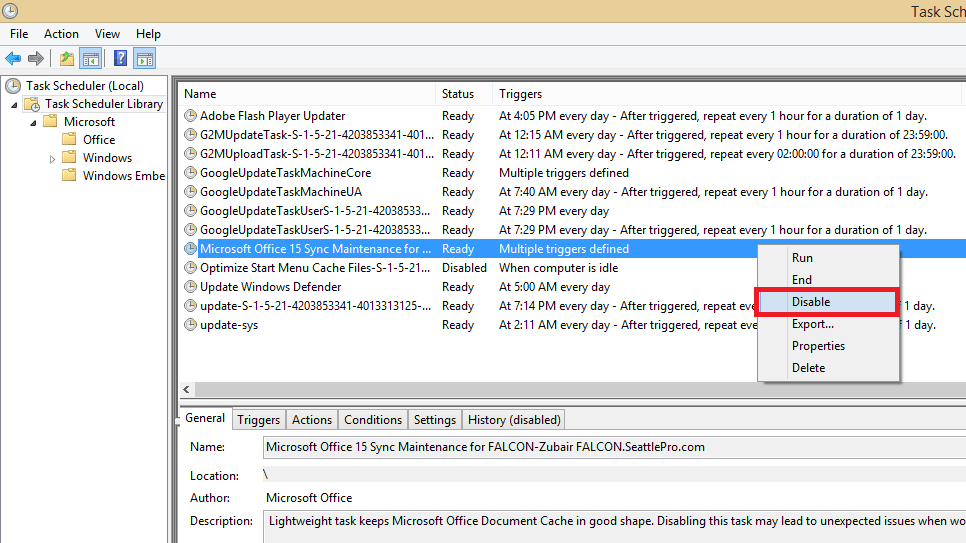
You could attempt to remove it from the file system and disable it in the Task Scheduler, but this could break things–and updates to Office will reinstall it, anyway. Go ahead and hide it, but there’s no real way to disable it.The Office Upload Center does have a clear function, but it also seems like needless complexity. With Windows 10 offering built-in OneDrive integration, why does Microsoft Office need its own, completely separate way of working with OneDrive?
Microsoft Office Document Imaging
That’s a question for Microsoft, not us–but at least now you know what that icon does.
When I open a Word document or Excel spreadsheet from a network drive I receive popup 'Microsoft Office Document Cache has stopped working. Hang on while Windows reports the problem to Microsoft', it then disapears and then the document opens.I've cleared the Office Upload Center cache which is set to delete the files from the cache when they are closed but issue continues.AV has been disabled but issue continues.The network drive is connected to serversharefolder. If I open explorer to said URL then I don't receive the popup, it only occurs when opening from the network drive.Office 365 Office 2016 32-bit is installed on Windows 10 Pro 64-bit. Hi,Based on your description, the document can be opened correctly but a popup would be prompted about the 'Office Document Cache'.Please open Office Upload Center, check if any files are syncing or uploading. Then open Word document from the network drive. Check if the issue can be reproduced when Office Upload Center is opened.Additionally, please open file explorer go to the following path:%LocalAppData%MicrosoftOffice16.0OfficeFileCacheCut or delete all cached files there. Open registry, go to HKEYCURRENTUSERsoftware policiesmicrosoftoffice16.0common, check if there is any Office Document Cache related keys and group policy settings.Best Regards,Winnie LiangPlease remember to mark the replies as answers if they helped.
If you have feedback for TechNet Subscriber Support, contact. Click to learn more. Visit the dedicated to share, explore and talk to experts about Microsoft Teams.
Hi,I am checking the status of this issue. Do you have any update for it?If you need any further help, feel free to post back for more discussion.If my reply is helpful to this question, please remember to mark it as answer.
Your action would be helpful to other users who encounter the same issue and read this thread. Thanks for your understanding.Best Regards,Winnie LiangPlease remember to mark the replies as answers if they helped. If you have feedback for TechNet Subscriber Support, contact. Click to learn more.
Visit the dedicated to share, explore and talk to experts about Microsoft Teams.