Rise Of The Tomb Raider Weapon Upgrades
. WW: November 2019Mode(s)Rise of the Tomb Raider is an video game developed. It is the sequel to the 2013 video game, and the eleventh entry in the series.
- Rise Of The Tomb Raider Weapons Guide
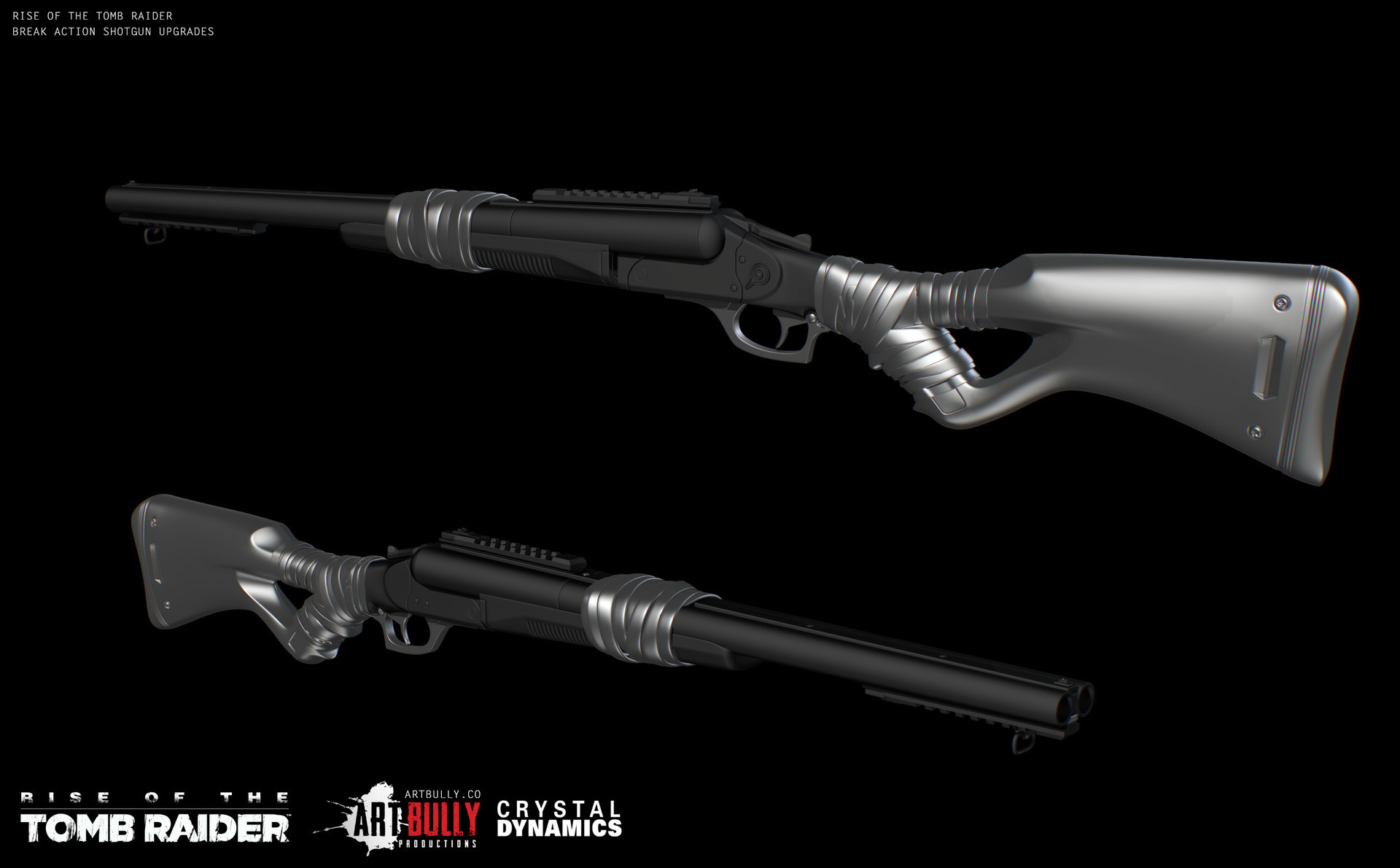
- Rise Of The Tomb Raider Weapon Upgrades List
- Rise Of The Tomb Raider Best Weapon Upgrades
The game was released by for and in 2015. Released the game for and in 2016. In April 2018 published the game for Linux and Mac, with a release set for November 2019.Its story follows as she ventures into Siberia in search of the legendary city of while battling the paramilitary organization Trinity, which intends to uncover the city's promise of immortality. Lara must traverse the environment and combat enemies with firearms and stealth as she explores semi- hubs. In these hubs she can raid challenge tombs to unlock new rewards, complete side missions, and scavenge for resources which can be used to craft useful materials.Development of Rise of the Tomb Raider closely followed the conclusion of development of the. Player feedback was considered during development, with the team reducing the number of and introducing more puzzles and challenge tombs. The team traveled to several locations in Turkey, including, and, to design Kitezh.
Returned to provide voice and motion-capture work for Lara. Powered by the Foundation, the game was also developed by and Nixxes Software.Rise of the Tomb Raider was announced at by Microsoft Studios.
Rise Of The Tomb Raider Weapons Guide
It was revealed as a for Microsoft at, which sparked player outrage and widespread criticism from the gaming press and community. The game was praised, with critics liked its graphics, gameplay, and characterization; however, some reviewers felt that it did not take enough risks.
By November 2017, the game had sold nearly seven million copies. Several downloadable story and content additions have been released for digital purchase. A sequel, was released in September 2018. Contents.Gameplay Rise of the Tomb Raider is a in which players control, who is on a quest to discover the legendary city of Kitezh.
Rise Of The Tomb Raider Mac Free Download is an action third person shooting free to play pc games which is the most latest version of Tomb Raider. In the game as usual players control the same old character Lara Croft but she will be having some new weapons and different abilities The Banner Saga 3. Rise of the Tomb Raider has five achievements/trophies that are awarded upon completing various Skill Tree character development and crafting tasks. The majority of these are fairly self-explanatory and easy enough to unlock, but will take time to complete due to the need to harvest plenty of reagents for your crafting endeavours and to earn enough XP to completely unlock one of the three Skill Trees. This automatic machine pistol is reminiscent of the Uzi from the classic Tomb Raider games. It has the same upgrades as the Semi-Auto Pistol but does slightly less damage and has a larger ammo capacity and faster fire rate. It is part of the 20 Year Celebration DLC pack. HANDGUN ATTACHMENTS.
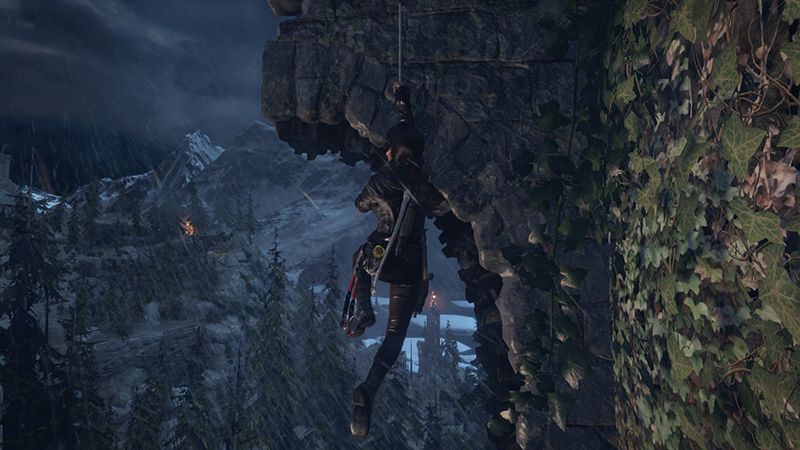
Combat is a major gameplay mechanic; Lara has a large variety of weapons at her disposal (including, and ), some of which have an alternate firing mode. Players may also utilize to progress through portions of the game, using to take out enemies, creating distractions to draw enemy attention away from Lara, or hiding in bushes to evade enemies. Lara can use the environment to fight enemies, shooting explosive barrels, tearing down rope-wrapped structures with rope arrows, or ambushing enemies from high ground. She can also use her and to engage in melee combat with enemies. Completing objectives and side content and eliminating enemies give players (XP). When players collect sufficient XP they level up, receiving a skill point, which can be spent on the game's three: brawler, hunter and survivor.
Brawler enhances Lara's efficiency with weapons, giving her abilities such as retrieving arrows from corpses and a steady aim, as well as boosting her resilience against attack and unlocks new combat skills, such as dodge kill. Hunter gives her an advantage when dealing with the environments and animals. Survivor covers a wide range of skills such as creating and setting. Lara learns new languages, enabling her to discover relics (such as coins) which can be traded for new equipment. Lara Croft explores one of the game's challenge tombs, which contains an ice shipThe game has semi-open hubs for players to explore.
In the hubs are items for Lara to collect, including crafting materials and survival caches. These items and such as relics and documents can be revealed to players using Survival Instinct, a vision mode which highlights items of interest. By collecting the materials, players can craft items with the game's crafting menu; Lara can craft ammunition, poisoned arrows (using death-cap mushrooms), and Molotov cocktails and hand grenades from cans and bottles. The open areas are filled with, which can be hunted to collect more resources. Players can discover and explore challenge tombs for new skills and outfits.
Lara's outfit, which affects her combat performance, can be changed at. The camps allow Lara to change her weapon loadouts, which is where she chooses one of each weapon type she will wield for example choosing which type of bow (Makeshift Longbow or Ancient Horn Bow) or pistol (Semi-Auto Pistol or Heavy Pistol), and are fast travel points which allow players to explore a previously-searched area. The game has and challenges which may give players new equipment, and players navigate intricate environments to progress. Lara can use her pickaxe to climb cliff-like surfaces (such as glaciers) and her rope arrows to create to access difficult-to-reach areas, and can climb trees and swim. Players solve during the game, in its main campaign and optional content. The puzzles, based on in-game physics, often connect; players must solve connecting puzzles to solve a larger one.Unlike the 2013 Tomb Raider reboot, Rise of the Tomb Raider lacks a multiplayer mode.
It introduces Expeditions, which allow players to replay the game with new constraints and requirements. The game has four modes: Chapter Replay, Chapter Replay Elite, Score Attack, and Remnant Resistance.
Chapter Replay and Chapter Replay Elite allow players to replay any level, and Elite allows them to bring already-acquired skills and weapons to the level. Score Attack introduces score chains to the game. Remnant Resistance allows players to create custom scenarios, which can be shared with other players. By completing Expeditions, players earn credits which can then be used to purchase digital to modify the gameplay. Common cards may be used only once, and foil cards can be used repeatedly. The cards can also be purchased in.
Plot One year after the events of Tomb Raider, Lara Croft is struggling to explain her experience of the supernatural on and is experiencing. Looking for answers, she turns to her late father's research on the lost city of and the promise of immortality. His partner, Ana, attempts to warn her that his obsession with Kitezh drove him to ruin and suicide. Lara ignores her and organizes an expedition to Syria, hoping to uncover the tomb of the Prophet of, who is a key figure in the Kitezh legend. The tomb is empty, and Lara is interrupted by Trinity—an ancient order of knights turned paramilitary organization investigating the supernatural—and their leader, Konstantin.
As she flees, Lara discovers a symbol etched into the tomb which she links to a book on Russian religious history in her father's study at the Croft manor. A Trinity assassin infiltrates the manor and steals the book, prompting Lara and her friend Jonah to go to. They are separated by an avalanche while climbing a mountain, and Lara is forced to continue alone.She discovers that Trinity has made a Soviet-era mine a base of operations in their search for Kitezh.
Lara is caught trying to retrieve the book, and is imprisoned with Ana. Konstantin forces her to reveal what she knows by slowly strangling Ana in front of her, but Lara cannot provide useful information. Ana then reveals herself as Trinity's spy, who manipulated her father. She and Konstantin interrogate Lara about the Divine Source, an artifact believed to bestow immortality. Lara escapes and helps Jacob, a stranger who leads her through the mines after she agrees to aid him and his people against Trinity. Jacob is revealed as leader of the Remnant, descendants of the Prophet's followers, and warns her that the Divine Source is not what she expects it to be.Konstantin's forces repeatedly attack the Remnant, justifying the slaughter as God's will. However, Lara discovers that Ana is dying and seeks the Divine Source to save herself.
Jacob and Lara decide that the only way to protect the Divine Source is to retrieve it before Trinity can. Lara recovers the Atlas, an artifact which is a map of Kitezh. She is reunited with Jonah, and they locate the path into the city.
Konstantin, aware of Jonah's presence, followed him in the hope of finding Lara. Trinity ambushes them, and Konstantin stabs Jonah and takes the Atlas. Lara brings Jonah to Jacob, who heals him and reveals that he is the Prophet, given immortality by the Divine Source.With Trinity advancing on the glacier which looms over Kitezh, Lara is forced to enter the city on a dangerous path.
She meets the Deathless Ones, the city's immortal guardians. Reading journals written by a Trinity agent, Lara realizes the truth of Jacob's warning: the Divine Source bestows immortality at the cost of one's self. The Remnant attack the Deathless Ones, giving Lara time to reach the heart of the city.
She meets Konstantin, who is blocking the path, and critically wounds him. Before he dies, he says that Lara's father did not commit suicide but was murdered by Trinity. Lara is too late to prevent Ana from retrieving the Divine Source, but Ana is overwhelmed by its power and Lara destroys it.
The Deathless Ones perish, and Jacob's immortality is lost. Happy that his death has finally come, he thanks Lara and peacefully disintegrates.Jacob's daughter, Sofia, leads the Remnant. Jonah recovers from his wounds and joins Lara in planning their next expedition, with Lara vowing to investigate more of the world's mysteries and thwart Trinity's plans. In a post-credits scene, two weeks before Lara and Jonah leave Siberia, Lara asks Ana if she killed her father. Ana denies it, admitting that Trinity gave her the order. She is then killed by a sniper, who asks his unseen superior about killing Lara and is ordered to stand down.Baba Yaga: The Temple of the Witch In the Baba Yaga, Lara investigates a disturbance in the Soviet mine. After fighting off a Trinity patrol she finds a young girl, Nadia, hiding in a sawmill.
Nadia confides in Lara about her search for her grandfather, Ivan. Ivan disappeared while trying to enter the Wicked Vale, a valley reportedly haunted by, a witch in Slavic folklore. Ivan blames the witch for the death of his wife, and wants to kill her.
Lara is skeptical about Baba Yaga's existence but, since Nadia is injured, agrees to enter the Wicked Vale and find Ivan.In the Vale, Lara is exposed to a rare pollen with potent hallucinogenic properties. After stumbling through a forest where she is tormented by visions of her father's suicide, she meets Baba Yaga and a pack of demonic wolves.
Lara narrowly escapes with her life and finds herself in a small, Soviet-era outpost. She unearths evidence of a secret Soviet biological-weapons project which attempted to harness the pollen, which abruptly ended when the researchers—including Serafima, a biochemist imprisoned in a nearby gulag—succumbed to the hallucinations.Lara deduces that Serafima weaponized the pollen, developed an antidote and kept her research secret from the military. With Nadia's help, Lara synthesizes a basic antidote from Serafima's recipe and returns to the Wicked Vale. Resisting the effects of the pollen, Lara finds the injured Ivan at the entrance to Baba Yaga's lair.Unable to leave the Wicked Vale while Baba Yaga controls it, Lara battles the witch under the pollen's influence and destroys its source. Baba Yaga is revealed as Serafima, who was led to believe that her husband, Ivan, and daughter were dead and used the pollen to become Baba Yaga and torment her captors. With Ivan, Serafima and Nadia reunited, Lara leaves the Wicked Vale.Cold Darkness Awakened In the Cold Darkness Awakened content, Lara enters a decommissioned Soviet weapons bunker which has been breached by a Trinity patrol. Trinity has inadvertently released an unstable pathogen into the air, which causes the people it infects to regress to a -like state.
Men are particularly vulnerable, since the virus stimulates testosterone and adrenaline production. The pathogen was created to create an army of unstoppable super-soldiers by a Soviet researcher, all of whose experiments failed. He died in the facility after accidentally releasing the pathogen, proud that he had created a weapon to defend his homeland. With Sofia and Nadia providing support from a helicopter, Lara tries to find the source of the pathogen before an enormous cloud is released into the atmosphere and contaminates the Remnant valley.The women plan to channel the pathogen from three towers into the central tower, detonating it and burning off the toxin. Lara shuts down each tower, collecting equipment, rescuing female prisoners and eliminating waves of the infected Trinity soldiers before entering the core tower. While fighting off the infected soldiers, she triggers a catastrophic explosion and jumps from the tower to Nadia and Sofia's helicopter.
Rise Of The Tomb Raider Weapon Upgrades List
Nadia and Lara watch the explosion as they fly to safety. Although the resulting fire burns the remaining pathogen, documents found in the facility indicate that the release was no accident; Trinity reactivated the facility to acquire a sample of the pathogen, and an agent of Trinity escaped with it before the bunker was destroyed.Blood Ties and Lara's Nightmare Blood Ties begins with Lara reading a note from her uncle, who says that since her mother disappeared he is the rightful owner of the Croft estate. With trees working their way into the side of the house and the roof caving in, Lara's childhood home desperately needs repair. She finds her father's safe and searches the manor for its combination, hoping to find his will and thus prove her ownership.
She finds artifacts from her past, and finally figures out the combination; however, the safe contains no proof of her ownership. Lara finds her mother's tomb under the main staircase and with both her parents proven dead, their property passes to her and she moves back in.Lara's Nightmare is similar to Blood Ties, with Lara's uncle unwilling to give her the manor. She fights off hordes of zombies and skulls before finding the master key. Lara kills a large skull in the main hallway, ending her nightmare.Development Rise of the Tomb Raider was developed by, with providing support.
Development of the game began two weeks after the team finished polishing the 2013. It was led by Noah Hughes and Brian Horton, the franchise's creative and game directors respectively. Returned as the game's writer, and reprised her role as protagonist., known for his work on, composed the soundtrack. Development was completed on 9 October 2015, with Crystal Dynamics confirming that the game was declared (indicating that it was being prepared for duplication and release).
Story and gameplay. When we think about what Lara's gone through, she's suffered through these traumatic events, seen friends die, and come out of the situation forever changed. What she needs is a way to reconcile the pain that she has suffered and also the draw that she has, this compulsion, to discover more of these things now that she's just glimpsed them on.—Game director Brian Horton on Lara's state after the 2013 rebootOne of the game's intentions was to craft a more 'personal' experience for players, and the team wanted to explore the journey in which Lara becomes the tomb raider. She becomes determined to uncover more myths, and convinces the world that they are real at the end of the 2013 reboot; this became her major driving force in the sequel. Although Lara must still struggle to survive, she is more confident and competent. The team tried to find a balance, making Lara more experienced and competent but vulnerable in crisis and appealing to players.
They hoped that in the story, players could see Lara's character progression. To indicate her hunger for knowledge, the team adjusted the collectibles; players would learn a new language, unlocking new content and upgrades. The new crafting system reflects Lara's resourcefulness, and her ability to use the environment against her enemies highlights her intelligence.Rhianna Pratchett found Rise of the Tomb Raider more difficult to write than the 2013 reboot, figuring out Lara's initial mental state and character introduction. Its cast was significantly smaller than the reboot, so more screen time could be given to each character. To help establish the game's tone and visuals, Crystal Dynamics developed a 'rippomatic' (a collection of movie scenes). Films included, which inspired the team about the game's stealth mechanic;, whose protagonist and Lara Croft are 'burdened with a truth that no one believes'. And inspired game scenes in which Lara fought bears and wolves.
And inspired the game's bows, arrows and pickaxe, and and helped the team conceive the game's tundra setting.They worked on improving the story's pacing, which Horton thought as important as the story itself. Several features with gameplay potential but not fitting its context, such as vehicles and an early scene in which Lara battled enemies in a, were cut. The team listened to player feedback about the original game and made gameplay adjustments, such as reducing the number of, expanding the hunting system, and increasing the significance of traversing and stealth. Cinematic moments and action scenes, designed by an internal team known as OMS ('oh my shit'), were retained in the sequel. The theme of survival remained the story's core, with the team modifying gameplay accordingly; the expanded crafting system required players to use the environments more. However, Crystal Dynamics avoided making it a; the team felt that it would discourage player exploration.
Like its predecessor, Rise of the Tomb Raider has a structure similar to; the team wanted players to feel that Siberia is a living, dynamic world, and the game not merely a long sequence of events. According to design director Michael Brinker, the team decided to make the game less ' than other titles; players would not be forced to complete any optional content. The skill-upgrades system was overhauled to include more player options.After the developers listened to player feedback, the game emphasized tomb-raiding more than its predecessors. According to Hughes, the team analyzed some of the older Tomb Raider titles and distilled their best features while incorporating the reboot's physics-based puzzles. They intended to add more ancient tombs, making players feel like real discoverers and inspiring awe. The tombs were made larger than the reboot, and water puzzles (featured in older Tomb Raider games) were included.
The puzzles were often interconnected, with the team adopting a nested-puzzle approach. Optional tombs were made more meaningful, giving players unique skills and items rather than just experience points. The difficulty of each tomb slowly increases as players progress.
Art and music. The in inspired the Flooded Archive, one of the game's tombsThe game world was designed to reflect Lara's distorted mental state, and the team introduced the concept of 'ominous beauty' to achieve this. The color scheme was vibrant, reflecting the game's large scale. The team was inspired by other video games and, including Russian realists. They traveled to and several locations in Turkey, including, and, researching and to design Syria and Kitezh. The team took six months to create the game's snow technology (such as snow tracks and avalanches), which helped increase player immersion in the game.
To add variety to its landscape, the team introduced the Oasis (with a dramatically-different look from Siberia).' S primary goal in composing the game's music was to support its narrative. Tahouri spoke to Crystal Dynamics in 2012 and contracted to write the score in late 2013, delighted to have more composition time than previous projects. He listened to the earlier games' soundtracks to 'immerse himself in the Tomb Raider world'. The soundtrack was recorded in by a 52-piece string-and-brass orchestra, including cello, woodwinds, and a developed by Saraz Musical Instruments.
The Siberian music features an instrument similar to a and low-pitched male singing. Dynamic Percussion System creates music as the game is played. Crystal Dynamics signed and guitarist to produce the game's theme song, 'I Shall Rise'. Technology.
Camilla Luddington provided the voice and motion capture for in Rise of the Tomb Raider.voiced Lara and provided at a studio over a two-year period. According to the actress, one of the greatest challenges in voicing Lara was having to 'yell over wind and snow'. Luddington trained for the role, with experts teaching her how to hold the weapons. The team wanted to ensure that Lara's first game for the looked good.
Spraying Mova on Luddington's face, they obtained 7,000 points of reference. The team had difficulty developing Lara from motion capture, finding Luddington's footage too realistic, and tried to give the young Lara 'subtle' facial expressions. They focused on Lara's physical details in cutscenes, where her muscles tensed as she climbed or her skin became blotchy from the cold. The studio used pose-based deformers to sculpt Lara's 'exact shape' as she moved.
The team also used wrinkle maps, allowing more natural, realistic movement for the character.Rise of the Tomb Raider was powered by the Foundation in-house game engine. The team used and to create light and shadows. They used a Horizon editor, editing text and graphics in a form closely resembling the finished product.
The team adopted a 'kit-bashing technique', quickly assembling a level with modules and rebuilding it until they were satisfied. To improve the game's graphical fidelity, the team partnered with Nixxes Software (which the Xbox 360 version). Release On 1 August 2013, executive Phil Rogers announced that a new Tomb Raider game was in development for the eighth generation of video game consoles. Microsoft announced the game during an press conference, with a scheduled late-2015 release.
At, the company said that Rise of the Tomb Raider would be an exclusive for its series of video-game platforms, including and; according to executive, it would be a timed exclusive similar to Microsoft's deal with and on and (in which both were released for ). This sparked player outrage from players (since Tomb Raider had a longer history with ), who blamed franchise owner for the decision. Microsoft's calling the game 'exclusive on Xbox for holiday 2015' caused confusion among the gaming press and players. Rogers explained in 2015 that the Microsoft timed exclusivity was primarily due to the company's strong support for the 2013 reboot. Crystal Dynamics head Darrell Gallagher said that the partnership could help the team 'deliver the best game that they can'. Rogers called the arrangement a 'natural' evolution and a 'tough' decision.Rise of the Tomb Raider was released on 10 November 2015, and the Windows version was released on 28 January 2016.
Microsoft Studios was the game's publisher for Xbox 360 and Xbox One. An 18-issue comic series, Tomb Raider, began publication in early 2014. Produced by and written by Pratchett and, the comics bridged the gap between the 2013 reboot and Rise of the Tomb Raider and explained the absence of some secondary characters in the sequel. Microsoft released a Rise of the Tomb Raider Xbox One bundle, including an Xbox One console, a code for and the game. A collector's edition included a 12-inch statue of Lara, a, a jade necklace and a replica of Lara's journal. A included the base game, additional outfits, weapons and expedition cards, and access to.
Preorders had exclusive access to the Holy Fire Card Pack, which can be used in the game's expeditions mode. Microsoft a Survival Billboard marketing event on. Eight contestants standing in front of a billboard were subjected to different harsh weather conditions, which were voted by Twitch's viewers. The contestant enduring the weather longest received a ' Tomb Raider-themed trip' Players could earn in-game rewards by participating (and interacting with) Twitch live-streaming in expedition mode.The game was supported by downloadable content, and its first post-launch update was released on 4 December 2015.
It introduced an endurance mode, with elements of a as Lara hunts and crafts items while facing hidden dangers and environmental hazards. The first story add-on, Baba Yaga: The Temple of the Witch, was released on 26 January 2016 for. Cold Darkness Awakened, the third DLC, introduced a horde mode in which Lara fights waves of infected enemies. A Rise of the Tomb Raider: 20th Year Celebration edition was released for on 11 October 2016. The edition (developed by Nixxes Software and Crystal Dynamics) adds several new features, including a classic outfit inspired by; for endurance mode; Blood Ties, a combat-free mode in which Lara explores the Croft manor; and Lara's Nightmare, in which players fight infected enemies in the manor. The DLC was free of charge to season-pass holders. To promote the 20th Year Celebration edition, the marketing team hung a jeep from the side of a building in.
Blood Ties supported when 20th Year Celebration was released, and and were supported on 6 December 2017. Released the game for and in April 2018. Reception ReceptionAggregate scoreAggregatorScore(PC) 86/100(XONE) 86/100(PS4) 88/100Review scoresPublicationScore7.5/108/109.5/109/109.3/10Critical reception Rise of the Tomb Raider received 'generally positive reviews' according to review aggregator.The game's graphics were praised by critics. Kimberly Wallace of called them 'stunning' and praised Crystal Dynamics for creating detailed environments for players to explore, although she noted several issues. Spencer Campbell of agreed, describing the areas as 'gorgeous' and noting that every location in the game looked unique. Justin Towell of praised the game's presentation and appreciated its animation, noting that it was a production. Steven Hansen of called it one of the best-looking games on the market, although he considered some of the lighting unrealistic.Wallace praised the story for several memorable moments, although she thought it was predictable except for the ending scene.
She liked the writers' decision to explore the relationship between Lara and her father and with Trinity, which she found interesting. Campbell criticized the story for being simple and formulaic; it 'took too many cues' from, and its characters were undeveloped and forgettable. Mike Mahardy of wrote that the story was emotional and the characters grounded and believable; its mysticism 'makes sense within the world they occupy', and he called the story tragic but uplifting. Towell praised the story for several surprising moments and was largely impressed by the voice acting, although he was disappointed that the story was so similar to the 2013 reboot. Peter Paras of singled out Luddington's performance as Lara, saying that she 'imbues the character with a sense of wonderment and determination'. Lucy O'Brien of called Lara an 'endearing' character driven by 'complex ambitions', and described the game's villains as 'strong'.Wallace found Rise of the Tomb Raider 's combat entertaining overall, and enjoyed the stealth section.
She liked the upgrade trees (which accommodate different styles of play), but found later combat sections repetitious. Campbell called the stealth section satisfyingly challenging, and enjoyed the range of player choices. He noted the combat's more-strategic nature, due to its larger arsenal. Mahardy called the combat 'superb', praising the game for giving players the freedom to experiment with gameplay mechanics.
He found the resource-gathering tedious, but the crafting system well-executed. Towell liked the game's combat and stealth, comparing it to and noting that Lara often felt like a 'cold-blooded killer' due to the abundance of combat. He felt that there were too many items to collect. O'Brien found some combat sections uninspired, but the new crafting abilities made them more enjoyable. She called the stealth component enjoyable but redundant. Although Hansen liked the addition of stealth, he said that Rise did not address the problems with the 2013 reboot (in which Lara was too violent, causing narrative dissonance).Wallace praised the game's abundant side content, finding it intriguing enough to lure her away from the main story.
She liked the Metroidvania world design, and the large hubs encouraged her to explore. Wallace enjoyed the expanded tombs and the puzzles, which were deeper and more intricate than those in the previous game. Campbell praised its hunting mechanic, which enhanced the game world. He wrote that the narrative shortcomings were balanced by gameplay complexity, particularly the optional tomb puzzles. Mahardy praised the open hubs' 'waterfall structure', where every player action may unlock new possibilities; however, Towell found the hubs filled with aimless, unappealing content. O'Brien called the challenge tombs the game's highlight (paying homage to the older Tomb Raider games), despite its shortage of puzzles.
Hansen found much of the content 'open world busywork', which he compared to the game series. Paras wrote that the expedition mode was a 'real treat'; Oli Welsh of criticized it, saying that there was no reason for the mode to exist other than to please and generate revenue from microtransactions.Wallace called Rise of the Tomb Raider 'better in every way' than the 2013 reboot, and said that the game had high replayability. Campbell was disappointed by the story, but considered the game an overall improvement on its predecessor. Towell called the game a 'safe sequel' which took few risks, but had a successful formula; O'Brien agreed that it succeeded in refining its predecessor's formula. Hansen found much of the game's content bloated; although it was an improvement, he criticized it for not fixing many of the original's shortcomings. According to Paras, the Tomb Raider franchise surpassed gaming classics such as and after 20 years with Rise of the Tomb Raider.
Sales Some gaming journalists were concerned about Rise of the Tomb Raider 's sales, since it was released on the same day as (a highly-anticipated game from, which also had Microsoft as its marketing partner). However, Microsoft believed that the games would not compete with one another. It was the fourth-bestselling game in the UK and Ireland in its week of release, debuting at number four in the UK retail software sales chart (behind Fallout 4, and ). However, the game did not sell well enough in the month after its release to appear on the chart. According to Square Enix, its initial commercial performance was 'solid'; game director Brian Horton and Microsoft executive Aaron Greenberg said that Microsoft Studios and Square Enix were satisfied with the game's sales.
Digitally, the Windows version sold three times better than the Xbox One version in the first month of release. The game had sold over one million copies by the end of 2015,and nearly seven million copies by November 2017.
^ Garratt, Patrick (10 November 2015). From the original on 20 August 2017. Retrieved 17 May 2018.
Nunneley, Stephany (29 October 2015). From the original on 17 May 2018.
Retrieved 17 May 2018. Sarker, Samit (21 August 2015). From the original on 17 May 2018. Retrieved 17 May 2018.
Cork, Jeff (10 November 2015). From the original on 17 May 2018. Retrieved 17 May 2018. ^ Kamen, Matt (24 September 2015). From the original on 22 May 2018. Retrieved 21 May 2018.
^ Narcisse, Evan (29 January 2016). From the original on 18 May 2018. Cara copy file dengan cmd files. Retrieved 17 May 2018. Towell, Justin (12 November 2015). From the original on 17 May 2018. Retrieved 17 May 2018. Prell, Sam (30 September 2015).
From the original on 18 May 2018. Retrieved 17 May 2018. Hall, Matt (10 October 2016).
From the original on 17 May 2018. Retrieved 17 May 2018.
Tyrrel, Brandin (15 June 2015). From the original on 17 May 2018. Retrieved 17 May 2018. Hall, Mat (10 October 2016). From the original on 18 May 2018. Retrieved 17 May 2018.
^ Newhouse, Alex (31 July 2015). From the original on 18 May 2018. Retrieved 17 May 2018. Phillips, Tom (17 February 2015). From the original on 17 May 2018. Retrieved 17 May 2018.
^ Welsh, Oli (9 November 2015). From the original on 22 June 2018. Retrieved 17 May 2016. Phillips, Tom (8 October 2015). From the original on 18 May 2018. Retrieved 17 May 2018. John Agnello, Anthony (14 May 2018).
Rise Of The Tomb Raider Best Weapon Upgrades
From the original on 22 May 2018. Retrieved 20 May 2018.
^ Kerr, Chris (12 February 2016). From the original on 23 May 2018. Retrieved 20 May 2018. ^ Ray Corriea, Alexa (12 October 2015). From the original on 16 June 2018. Retrieved 20 May 2018.
Mahardy, Mike (16 October 2015). From the original on 22 May 2018. Retrieved 20 May 2018. Makuch, Eddie (9 October 2015). From the original on 22 May 2018. Retrieved 20 May 2018.
Osborn, Alex (9 October 2015). From the original on 22 May 2018. Retrieved 20 May 2018. ^. 16 April 2018. From the original on 22 May 2018. Retrieved 21 May 2018.
^ Hanson, Ben (11 February 2015). From the original on 22 May 2018. Retrieved 20 May 2018. ^ Hanson, Ben (4 February 2015). From the original on 22 May 2018. Retrieved 20 May 2018.
^ Campbell, Colin (10 July 2015). From the original on 22 February 2018. Retrieved 20 May 2018. Reeves, Ben (13 February 2015). From the original on 22 May 2018. Retrieved 20 May 2018. Hilliard, Kyle (18 February 2015).
From the original on 16 June 2018. Retrieved 20 May 2018.
Hanson, Ben (25 February 2015). From the original on 16 June 2018. Retrieved 20 May 2018. Phillips, Tom (17 February 2015). From the original on 17 May 2018. Retrieved 20 May 2018.
Hanson, Ben (16 February 2015). From the original on 22 May 2018. Retrieved 20 May 2018. Ray Corriea, Alexa (14 October 2015). From the original on 22 May 2018.
Retrieved 21 May 2018. The Music of Tomb Raider. 6 November 2015. From the original on 20 June 2018. Retrieved 21 May 2018. Osborn, Alex (29 October 2015). From the original on 22 May 2018.
Retrieved 21 May 2018. Morales, Aaron (16 November 2015). From the original on 18 January 2018. Retrieved 21 May 2018. Hilliard, Kyle (27 February 2015). From the original on 22 May 2018. Retrieved 21 May 2018.
G. Macy, Seth (7 August 2014). From the original on 22 May 2018. Retrieved 21 May 2018. 16 October 2015. From the original on 22 May 2018.
Retrieved 21 May 2018. Karmali, Luke (1 August 2013). From the original on 22 May 2018. Retrieved 21 May 2018. Walton, Mark (9 June 2014).
From the original on 22 May 2018. Retrieved 21 May 2018. Yin-Poole, Wesley (14 August 2014).
From the original on 20 May 2018. Retrieved 21 May 2018. Schreier, Jason (8 December 2014). From the original on 24 January 2018. Retrieved 21 May 2018. Makuch, Eddie (23 February 2015).
From the original on 22 May 2018. Retrieved 21 May 2018. Futter, Mike (5 August 2015).
From the original on 23 May 2018. Retrieved 21 May 2018.
Albert, Brian (15 June 2015). From the original on 22 May 2018.
Retrieved 21 May 2018. Makuch, Eddie (5 January 2016). From the original on 12 May 2018. Retrieved 21 May 2018. Tach, Dave (9 December 2014). From the original on 16 June 2018. Retrieved 21 May 2018.
Polo, Susana (10 November 2015). From the original on 22 May 2018. Retrieved 21 May 2018. Blake, Vikki (28 September 2015). From the original on 22 May 2018.
Retrieved 21 May 2018. Karmali, Luke (26 August 2015). From the original on 22 May 2018. Retrieved 21 May 2018. Nunneley, Stephanny (7 October 2015).
From the original on 16 June 2018. Retrieved 21 May 2018. Nunneley, Stephany (17 October 2015). From the original on 22 May 2018. Retrieved 21 May 2018. Yin-Poole, Wesley (13 November 2015). From the original on 22 May 2018.
Retrieved 21 May 2018. McWhertor, Michael (10 November 2015). From the original on 23 May 2018. Retrieved 21 May 2018.
Sarker, Samit (4 December 2015). From the original on 22 May 2018. Retrieved 21 May 2018. Kollar, Phillip (19 January 2016). From the original on 23 May 2018.
Retrieved 21 May 2018. Phillips, Tom (22 March 2016). From the original on 23 May 2018. Retrieved 21 May 2018. Riaz, Adnan (19 July 2018).
Hardcore Gamer. From the original on 22 May 2018.
Retrieved 22 May 2018. Goldfarb, Andrew (19 July 2016). From the original on 22 May 2018. Retrieved 21 May 2018.
Monllos, Kristina (7 October 2016). From the original on 22 May 2018. Retrieved 21 May 2018. Billcliff, James (6 December 2017). From the original on 22 May 2018. Retrieved 21 May 2018.
Retrieved 26 June 2018. From the original on 12 February 2016. Retrieved 14 February 2016. From the original on 24 February 2016.
Retrieved 14 February 2016. From the original on 26 December 2017.
Retrieved 30 November 2017. ^ Hansen, Steven (9 November 2015). From the original on 12 November 2015.
Retrieved 9 November 2015. ^ Campbell, Spencer (10 November 2015). Electronic Gaming Monthly. From the original on 15 November 2015. Retrieved 10 November 2015.
^ Wallace, Kimberley (9 November 2015). From the original on 13 November 2015. Retrieved 9 November 2015. ^ Paras, Peter (9 November 2015). From the original on 17 November 2015. Retrieved 9 November 2015.
^ Mahardy, Mike (9 November 2015). From the original on 12 November 2015. Retrieved 9 November 2015. ^ Towell, Justin (9 November 2015). From the original on 17 November 2015. Retrieved 9 November 2015.
^ O'Brien, Lucy (9 November 2015). From the original on 10 November 2015. Retrieved 9 November 2015. Saed, Sherif (27 October 2015). From the original on 22 May 2018.
Retrieved 21 May 2018. Phillips, Tom (16 November 2015). From the original on 22 December 2015. Retrieved 19 December 2015. Handrahan, Matthew (5 January 2016). From the original on 22 May 2018.
Retrieved 21 May 2018. Hussain, Tamoor (4 February 2016).
From the original on 22 May 2018. Retrieved 21 May 2018. Makuch, Eddie (18 December 2015). From the original on 20 December 2015. Retrieved 19 December 2015. Hillier, Brenna. From the original on 27 February 2016.
Retrieved 27 February 2016. Scammell, David (4 January 2016). From the original on 28 January 2016. Retrieved 4 January 2016. 27 November 2017. From the original on 21 January 2018. Retrieved 12 January 2018.
Reynolds, Matthew (1 September 2015). From the original on 30 October 2015. Retrieved 5 February 2016. 12 November 2015.
Archived from on 14 November 2015. Retrieved 13 November 2015. 16 December 2015. From the original on 27 December 2015. Retrieved 4 February 2016. From the original on 19 December 2015.
Retrieved 4 February 2016. 31 December 2015. From the original on 16 January 2016. Retrieved 5 February 2016. 30 December 2015. From the original on 1 February 2016. Retrieved 5 February 2016.
9 February 2016. From the original on 3 July 2017. Retrieved 4 March 2016.
Net Revolution. 1 January 2016. From the original on 26 January 2016. Retrieved 5 February 2016. From the original on 12 January 2016. Retrieved 13 January 2016.
12 February 2016. Archived from on 21 March 2016.
13 January 2016. From the original on 16 January 2016. Retrieved 14 January 2016. 1 September 2015. From the original on 20 March 2016.
Retrieved 1 September 2017. From the original on 29 January 2016. Retrieved 14 February 2016. 15 March 2018. From the original on 15 March 2018.
Retrieved 15 March 2018.External links.